Showing posts with label Hilo Days. Show all posts

Friday, May 7, 2021

Hilo Days: My Squishy Adventure

One should never torment cats as they go about their daily routines. I learned this the hard way during my pre-school years. It’s one of the adventures I wrote about in my now-defunct Hilo Days website. I thought you might get a kick out of the entry.

NEVER DIG UP A CAT MOUND


Hilo, like any other city or town in the world, had its share of dogs and cats running all around the place.

If there's anything I learned about cats during my B.R. [Before Riverside (School)] days, it was never to fool around with the mound of dirt put together by a cat. 


You probably already know what's coming, but don't get ahead of me.


I was playing soldier one day [at Obachan’s (Japanese for “grandmother”) house], running up and down the front stairs when I saw this cat scratching around in the dirt on the side of the lawn that abutted the back end of Yogi Store (next to our "haole" guava tree). 


Like an Army Ranger, I sneaked up on the cat and grenaded it out of existence with a rubber ball.


There was this tempting dirt mound that beckoned me like a piece of sweet candy. Couldn't resist. Had to stick my fingers into the pile. My fingers plunged into what felt like soft, squishy warm bananas.


You know what it smelled like. And you know exactly what it was. They say in the books that cats hid their "doings" so that animals that prey on them won't know they're around. Well, the cat did his duty and I learned a lesson.


And I'm sure that as I stood there gagging, wiping the gooey stuff on the grass, that little bugger was hiding behind a tree, watching me, chuckling nasty little cat chuckles.


[Craig’s Note: You’re right. This story stinks.]


Friday, July 10, 2020

Hilo Days: A Humiliating Day in the Park

When I was young, I could always managed to find experiences that tempered any arrogance and self-confidence I might have felt at the time. Like the time I fancied myself quite the fisherman. Boy, did I learn another lesson in life, so much so that I wrote about it in my now-defunct website, Hilo Days.

Fishing  Derby White-Wash

A bunch of us entered a fishing derby at Liliuokalani Park, which was newly opened after the [1960] tidal wave took it apart.

The county parks and recreation department had announced that a fishing derby was going to be held at the park, and anyone who wanted to enter could do so by showing up on the designated Saturday.

Artie Kimura, Ron Takata, Gary Sato and I (there may have been others) got our gear in shape, buying new bamboo rods, tsuji [what we called fishing line], floats, hooks, buckets to keep our fish in, and frozen prawns to use as bait. I was actually quite excited and had dreams about the huge mullet that I was going to bring home for dinner.

So we show up, and there are about a million people there, all jostling for space and the hot fishing spots. After registering, we picked a likely looking area and waited for the starter's whistle. When the shrill blast filled the air, a million lines hit the water, floats started bobbing, and suddenly the water boiled with hungry fish.

To the right of me, a kid pulled out a big tilapia. To the left of me, another kid pulled out a large mullet. Across the pond, dozens of fish were being hauled out of the water. At the pond behind me, the anglers were going crazy.

And I stood there with my line in the water. I dabbed my bait on the surface, pulled it in, threw it back out, moved it from left to right, pulled it in again and threw it back out again.

Nothing.

What? Did I have bad breath, or something?

How embarrassing. Kids who had no idea what they were doing were catching fish, and there I was, my line in the water. Artie caught a few, Ron and Gary did okay too. Me, I was the only one with nothing but warm, stink bait to show for my day's efforts.

Plus, I got a sunburn — the back of my neck, my forehead, nose and cheeks were red and irritable for a week. Serves me right for thinking I knew how to fish.

Sunday, February 23, 2020

Hilo Days: An “Almost” Great Experience

It was a memorable 1962 outing, but not what I expected it to be. My only Maura Kea (tallest mountain in the world, base to summit) adventure was chronicled in my no-long-there website, Hilo Days. Join me as I relive the occasion.

Mountain Sickness

Our church Pilgrim Fellowship club went on a weekend trip to Mauna Kea during my senior year.

We were all so excited as we planned what to eat, what to bring, how we would prevent the car radiators from freezing up and bursting, what we would wear and how we'd get there.

I don't think I had ever looked forward to anything as much in my entire life. I was looking forward to this trip for weeks.

We congregated at the Church of the Holy Cross, piled into some cars, and headed for the mountain. Up the Saddle Road until we came to a small side road that turned right, toward Mauna Kea. Right turn, and here we go.

It was a rather sickening trip up, to tell the truth. If I were prone to motion sickness, I would have lost my breakfast long before we reached the cabins, which served as our over-night accommodations and jumping-off point the next morning.

We ran around the campgrounds for an hour or so, shivering in the cold mountain air, charging through the patches of snow that lay on the ground. Although the air was pretty thin, and oxygen was pretty scarce, none of us seemed to have any problems breathing.

The rarefied air did make us all tired, however, and we turned in early after dinner and a few rounds of cards.

I awoke the next morning as nauseated as a pregnant woman. I had altitude sickness in the worst way, and knew that my dreams of mountain-climbing glory had come to an end. There was no way I was going to be able to make the final walk to the summit.

Ron Takata and Geraldine Shiraishi also crapped out, and the three of us spent the morning adjusting in the cabin, and walking around outside in the crisp air. It was invigorating, but depressing. We knew that the others were having the experience of their lives.

After a few hours, the others began returning, their cheeks rosy from the nippy air and mountain wind. They were chattering away about the frozen lake, and the 100-yard gravely climb to the top (one step up, a half-step slide backwards).

What a major disappointment. I never did get past the cabins.

Wednesday, September 18, 2019

Hilo Days: Humor in My Own Mind


The Japanese phrases we used when we were kids in Hilo have stuck with me all these years. I wrote about them in my old Hilo Days website. Even today, when I hear people use them, I have flashes of memories of my youth. 

I Kill the Language

Arigato Gozaimasu
"Itadaki-masu." Please excuse me while I eat. As long as I can remember, we always used to preface our meal with this phrase.

Mom was a stickler on Japanese good manners (I guess she picked it up from her Mom) and made us say that before we ate. Didn't bother me at all.

Every time I said it, I would pretend I was saying "Eat a duck if you must."

"Ogochiso-sama." The food was delicious. We had to say this when we were done eating. Good manners again. I didn't mind. It always sounded like "Oh good, she's sewing some."

"Arigato-gozai-masu." Thanks a lot. "Never forget to say please and thank you," Mom used to say. Impeccable manners. I didn't mind. I used to think I was saying "Alligator goes high in March."

"Oyasumi-na-sai." I'm going to sleep now. Guess this was to let everyone know you were going nightie-night and not worry about you if they looked up and you were gone. Manners again. I didn't mind. It sounded like "Oh yeah, sue me outside."

With this wonderful insight into the Japanese language, is it any wonder that I just squeaked by when I entered Japanese School in the second grade.

To this day, this language game has continued to provide me with hours of fun. Sometimes a phrase would strike me as funny and I would start to chuckle out loud. People around me probably would chuckle to themselves as they watched me chuckle to myself. And they probably still do.

But I didn't care, and I still don't. They don't know what they're missing.

Friday, March 22, 2019

Hilo Days: Was the Gangster’s Car Real?


A memory imprinted indelibly in my mind is when I paid a dime to see notorious Chicago gangster Al Capone’s car. I wrote about it in my long-gone blog, Hilo Days. But I did keep the post on file. Enjoy!

Al Capone’s Car

At least once a year, the E.K. Fernandez Carnival would come to town for a couple of weeks.

It situated all over the place, but generally near the present Hilo Civic Auditorium, or at St. Joseph's School, about a half-mile away from Obachan's house.

Invariably, it rained. One of Dad's favorite saying was that whenever E.K. Fernandez comes to town, it was going to rain. Come to think of it, I heard that a lot in those days. I believed it too, until I realized that no matter who came to town, it was going to rain. Hilo simply was the rain capital of the world.

One year, Obachan told me that Al Capone's (she pronounced it "Capo-nay's") gangster car was going to be displayed at the carnival. I think it was Walter J. and I who walked to St. Joseph's, and paid our dime to see the historic car.

It was an old '30s sedan, with bullet-proof windows. The man showed us where the bullets had bounced off the windows, leaving little marks.

We gasped at the bullet holes in the fenders. We gasped at the little holes where Al Capone's tommy guns stuck out. We gasped at everything.

The car was probably fake.

Sunday, December 23, 2018

Hilo Days: The Summer of ‘52

Every summer was an adventure—some fun, some not so fun—when I expanded my little world. I wrote about the summer of 1952 in my old website, Hilo Days (now defunct). I'm reposting it here for you s you can reminisce about your good ol' days ... and laugh at me.

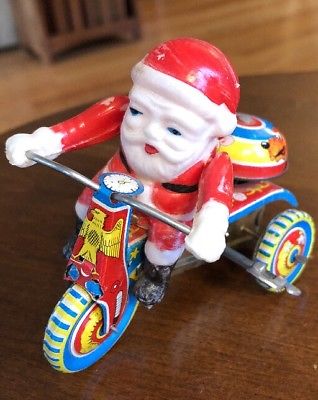
My Super Tricycle

Santa was good to me that year [1951]. And good thing too, because during the summer vacation that followed, that rat Michael broke the news that there was no such person as Santa Claus.

I got this real neat tricycle that was big. I mean it was about three feet tall, and about four feet long with pedals and a chain-drive that made it a cross between a kiddie tricycle and a full-fledged two-wheeler.

I'd join the neighborhood kids pedaling up and down the street—up the hill and down again—always about 50 yards behind, sucking up their dust. Of course I got no respect from those with two-wheelers, but I was the envy of all the ones who had no wheels at all—Reggie, Michael, Laureen and Billy Boy.

One day I smashed into a junk pile at the bottom of our driveway and flushed out a big rat. The kids reacted in one of two ways. Half the kids screamed and ran away, and the other half joined me as I picked up rocks and started pelting the poor creature.

I was pretty brave until Michael informed me that all rats have this bug that carries a disease and if you get too close, it would jump on you (the bug would) and bite you until you die. I believed him.

He may have been stretching the truth a little bit, but I believed him. I don't know why. He was a couple of years younger than I was. In retrospect, he must have been talking about the plague.

There was one time I had a hard time believing him. We were sitting on the front steps of my house during the summer of 1952, when out of the clear blue sky he asked if I believed in Santa Claus. Of course, I said. Well, he said, there's no such person. Santa Claus is your daddy.

Talk about being crushed! I called him a fricking liar, and all the small-boy swear words I knew. The nerve of that little twerp telling me there's no such thing as Santa Claus. Boy! I never realized at the time what a wise kid Michael was. I never broached the subject with Mom and Dad; I guess I was afraid of what their answer would be.

I was beginning to grow up and I think I made giant strides in that direction during the summer of '52.


Sunday, September 16, 2018

Hilo Days: Motherhood Triumphant

This article appeared in my Hilo Days blog many years ago and I thought I’d share it with you. It taught me a lesson about motherhood and how moms care for and about their offspring.

A Lesson in Nature

One day, Miss Yanagihara brought  a tiny baby mejiro [Japanese white eye] to [our first-grade] class. Someone had found it on the ground. Obviously, it had fallen from the nest. Or perhaps it was trying out its wings and got loose (say, that reminds me of the story where I got lost after Sunday School a few pages back).

The baby bird was placed in a bird cage, and a piece of papaya was stuck in the cage with it. The bird just chirped merrily and ignored the fruit. Ungrateful bird. I think Miss Yanagihara gave up some of her lunch papaya to feed the bird.

Anyway, class progressed. Everybody kind of forgot about the bird, until Miss Yanagihara shushed us and pointed to the back of the room.

Mama bird had hopped into the classroom, and was sticking her beak through the cage bars and feeding the baby bird. Mother Nature at work! The mama would feed her kid, fly out, fly back in, fed her kid, fly out, fly in ... you get the idea.

Miss Yanagihara picked up the cage and told us to follow her outside. She set the cage on the ground in the courtyard while we all watched. Just like in the movies, the mama bird flew down, chirpingly berated Miss Yanagihara, chirped a "Follow Me!" in mejiro-talk, and away she and her wayward baby flew.

Everyone was a-buzz about how the mama found and rescued her child. But you know, the only thing I could think about was what Miss Yanagihara was going to have for her lunch now that her papaya was gone. Honest. I worried about things like that. I was a strange kid.


Friday, March 9, 2018

Hilo Days: Pooped Out for Real

Were you ever so uneasy, uncomfortable, frightened, or traumatized that you pooped your pants? I did just that, and I’ll never forget it. Here’s the little story I wrote about that stinky experience in my long-gone “Hilo Days” website. Enjoy, but hold your nose.

A Traumatic First Day

The first day of Riverside School, I shit my pants.

Honest! Here I was, a first-time first-grader, being dropped off by Dad, who pointed out the first-grade classroom, got me steered in the right direction, then drove off to work.

My stomach dropped. Something else dropped too—a golf ball-sized lump of stuff.

I've always wondered if anyone else smelled it. They probably did, but nobody said anything about it. I went through the whole day with this lump in my shorts. When I got home, I finally got rid of it.

We all had a good laugh about it, but I can tell you that my laughter was due more to relief that I made it through the first day, than because I thought it was funny.

And I bet Mom and Dad also wondered if anyone had smelled it. I'll bet they were embarrassed "in absentia."

But wait a minute -- think about this: What if EVERY kid in my class had a lump in his/her pants as well? Huh? What if they all did it too? Can you imagine 30 kids, all self-conscious, all with doo-doo between their legs.

And what if the teacher also had ... nah, can't be.

Sunday, January 7, 2018

Hilo Days: Quick Draw Gets Shot Down

Just when I thought I was a hot shot, I fell through the cracks—intp a chasm, actually. Here’s my entry in my once-upon-a-time Hilo Days website.

100 + 11 = Eleventy-One

Eleventy-one. Sounds stupid, but that actually was an answer I gave in class.

I remember Miss Yanagihara gathering a bunch of us first-graders around the blackboard and asking us what certain numbers were. When 111 came up, I shot my hand up like a flash and could hardly wait until she called on me.

"Eleventy-one!" I blurted out proudly, and puffed my cheek out as several first-grade heads nodded in agreement.

I basked in the glow of peer adoration until I was brought crashing back to earth by Miss Yanagihara's chuckle, and the devastating words, "Wrong! Anybody else know the right answer?"

These things tend to stick with you for a long time. Maybe that's why I hardly volunteered answers in any classes I was in during my career as a student.

Thursday, July 6, 2017

Hilo Days: Where I Spent My Formative Years

In my old website, Hilo Days, I spent some time talking about our Ekaha Street house. Lots of memories there, we lived there from 1949 until about 1964, when the family moved to Reed’s Island while I was away at college.

It’s always fun to drive by the old house whenever I visit Hilo, to see how much the house and neighborhood have changed.

The Ekaha Street Neighborhood


Ekaha Street [in Hilo] was a neat street.

When we moved there, the street had a chicken yard, a Portuguese sausage smoker, a large vegetable patch, a rich contractor, a cane field behind our house, and a cattle rustler.

It was the third in a series of streets with strange names one encountered along Kaymana Drive on the way to Ainako/Kaumana. The first was Wiliwili Street, the second was Iwaiwa Street, and the third was Ekaha Street.

Our street was situated just below the Ainako residential area, which itself was situated just below the Kaumana area. It was a cul-de-sac, with 11 homes. Three of them on the left side of the street were built and rented out by Dr. Kutsunai.

Current Google Map with 2 Homes Added
We lived in the middle one. The first one (on our right) was distinguished by no basement, no porch, and an elevated front yard. Ours was distinguished by a low basement, a large front porch, and a sloping front yard. The third (on our left) was distinguished by a large basement, no front porch, and a regular front yard.

Let's take a look at the neighborhood, starting from the right side of the street as you entered, then coming back down to Waianuenue Avenue.

A Portuguese family lived in the first house. I don't know anything about it, except that over the years, they had a lot of foster children living there.

The family was related to the family in the second house—the Aguilars (also Portuguese). There's not much to say about them either, except that they used to make Portuguese sausage in a little smokehouse. I remember one girl who lived there—Carol. She was a few years older than I was. And I do remember marveling at her cat's new-born kittens once. The Aguilars had a large "Vee" tree that you could see from the road.

The next house was the one directly across the street from us. According to Mom, the father had been convicted of cattle rustling. They were the Medeiros family. We played a lot with the two kids—Reggie, and Michael. Reggie was a little slow and a funny-looking, awkward kid. Michael was actually kind of intelligent. I got my second wasp sting on their porch when we were dive-bombed after knocking down a paper wasp nest.

Then came an empty lot (actually two lots) that variously sported a vegetable garden, weeds, and an old shack of a house.

Next to it was a rather nice home that soon would be occupied by a haole family with a boy that we all liked. I think it was the McKenzies. They had a son, Scott, and a dog—a cocker spaniel named Freckles. The McKenzies moved in later. They weren't there when we moved in, and they weren't there when we moved out.

At the right side of street's end was the Sonomura family. They were rich. He was a general building contractor who bought a new Cadillac every year. His old Cadillac went to his wife. We didn't see too much of them.

Next to them lived the Kawasaka family. Their daughter Carol was my classmate (Hilo High, 1962). They had two sons; Gary and I spent a lot of time together, and I can't remember the name of his little brother. They lived next to a gully (they called it the "pali") at the bottom of which the father had set up a basketball net.

Mr. Kawasaka, by the way, worked for the State, and actually interviewed me for a job when I applied for a summer job at the Hilo nursery during the summer of 1962.

Heading back to Waianuenue Avenue, the next house belonged to Miss Matsuo. She lived there with her old mother, and I remember the whole neighborhood went to her mother's birthday party one time—maybe it was her 75th, or 100th, I don't remember.

The funniest thing happened years later when I visited Disneyland for the first time. There used to be a guest book at the end of Main Street where you'd sign your name in your own state book. Guess whose name was just before mine. Miss Matsuo's. Small world!

The Teradas' house was next. They had a son whose name totally escapes me, a daughter, Deane, and a cocker spaniel. They were older kids, so they didn't play with us too much.

Later, when I was in high school, one of my classmates told me he had been talking to Deane, and that she had told him she didn't care for me too much. Her loss. She just didn't appreciate brilliant strange kids. Mr. Terada, by the way, made neat slingshots out of guava branches and gave me one, which I used to shoot a neighbor's kid and almost put her eye out.

The next house was the one on our right. The Wongs lived there—William and Doris Wong. They had four kids—Marian, Wilton, Laureen and William Junior (everybody called him "Billy Boy").

The Wongs were a neat family. Mr. Wong did all kinds of stuff. He ran a sausage factory (Hilo Meat, later to be known as Miko), and he either ran or took care of a golf driving range. I have lots of stories about the Wongs.

Our Old House Today
Then came our house.

On the other side of our house was the Kutsunai family. No, not Dr. Kutsunai—his brother and his family. They had two children, but they were much, much older. I believe they were in high school when we moved in. They were the only ones who never cleared out the back portion of their lot. The Wongs had a large backyard, and so did we after Dad hired some church kids of clear out the weeds. Instead, the Kutsunai's backyard was full of California grass.

The last house (actually the first house on the left side when you entered Ekaha Street) was another mystery. But it had a chicken yard. And what a chicken yard. There were regular chickens, ducks, bantam chickens and turkeys there. The fowl population never seemed to diminish, but you can bet your buttons they weren't there just for decoration.

That's it. That's Ekaha Street. I lived there 15 years.


Friday, April 21, 2017

Hilo Days: A Lesson in Life

It's what school is for, not just lessons in various subjects and academic disciplines, but in life as well. Lessons such as "Don't take kind-hearted people for granted."

In my old website, Hilo Days, I recounted such an incident that happened during my senior year at Hilo High School. Read, and see if you can learn a lesson too.

Cutting Class?

Our zoology/physiology teacher, Mr. James Noda, once turned me in for cutting class.

I didn't actually cut class of course, but he wanted to teach me a lesson. It was during the preparation for the annual senior dance.

I was to be in charge of lights, a rather innocuous job, but an important one none-the-less. No lights, no dance. I never took it seriously until the day of the dance when I discovered we were short about two dozen light bulbs.

So, I had to scramble, appropriate some from my home and my friends' homes, and buy some with no approved budget.

We had a meeting that started during the lunch hour, and ran late. Instead of asking permission from Mr. Noda, I stayed at the meeting that cut into the time I was supposed to be in Mr. Noda's class. So I just never went.

I got a note in my next class to see counselor Mr. Ung Soy Afook (initials "USA") immediately. He called me into his office and showed me a note he had gotten from Mr. Noda. It read: "Call Craig Miyamoto in and scold him for cutting my class!"

Now, this was the only time I ever talked to Mr. Afook, and when I was called to see him, I could only imagine the worst things happening. My ass was grass, right? Wrong.

Mr. Afook said Mr. Noda probably was just hurt that I hadn't consulted him before staying at the late meeting, and that I should just go up to him and apologize for not thinking clearly.

So, I went up to Mr. Noda's class immediately, hat in hand (well, not really, I didn't wear a hat), and apologized for being so stupid. What could he say? He forgave me, for after all, he knew I wanted to be a doctor, and I was one of his favorite students.

It goes without saying that I got an A in his class.


Tuesday, November 29, 2016

Hilo Days: The Bees’ Knees

Have you ever encountered an angry wasp (or hornet, for that matter)? I have, and I paid deadly for it. It was my first experience being stung by a paper wasp, an experience I remember to this day.

Here’s a bee story as it was published in my now-defunct Hilo Days website.

Great-Obachan's Room

I don't have many memories of my great-grandmother (Obachan's mother). In fact, the only recollections I have are her being bed-ridden in the small room adjoining the kitchen at Obachan's house, and that she wore diapers.

The room itself has an unpleasant memory, for it was there that I got my first and only "yellow jacket" (actually, paper wasp) sting. I was looking out the window and leaned my elbow against the sill. Waiting for me there was a paper wasp. When I leaned against it, it stung me. Hurt like hell, too.

I've had honeybee stings that hurt, but they were nothing like that wasp sting. I think it was saving up its poison especially for me. Obachan put some bluing on it and said it would be okay. So I walked around with a blue elbow for a day.

A few years later, when we had moved to Kaumana and I used to spend the weekends at Obachan's house, a friend of mine showed me how to take wasp grubs out of the paper nest, fry them in shoyu and butter, and eat them. Tell you the truth, I never ate one, but they sure looked yummy when he popped them in his mouth.

This is turning into a bee story. Dad once told me that they used to eat the grubs when they were attending the University of Hawaii. You've seen pictures of college students swallowing live goldfish in the '50s? Well, the UH campus craze was the swallowing of wasp grubs. Live, squirmy, yecchy wasp grubs.

The neighborhood kids used to look for carpenter bee drones. Carpenter bees are those huge, round black bees that bore holes in wood to lay their eggs and raise their families.

The drones were males, and they were golden-colored—quite pretty, in fact. The kids used to catch them (they don't sting), tie one end of a long thread around the bee's waist, and the other end to a button on their shirt. The bees would fly around and around their heads as they walked down the street.

Personally, I never had the nerve to do something like that.


Tuesday, September 27, 2016

Hilo Days: It Weren’t No Chopsticks

I was born with a perpetual musical earworm in my head. Dad could play the violin, banjo and harmonica, and he passed on his musical genes to me. Not only did I take piano lessons, I ended up playing the clarinet in the Hilo Intermediate and Hilo High School bands.

In college, some friends and I formed a folk-singing group and I played the tenor ukulele, guitar and recorder.

Here’s the story I wrote about my piano adventures in my old Hilo Days website.

A Born Pianist

That summer [of 1956], I picked up two more activities. I adopted stamp collecting all on my own, but piano lessons were forced on me.

Mom and Dad always came up with stuff to cramp my style. If it wasn't Japanese School, it was those consarned piano lessons.

Sister Dayle had started taking piano lessons a couple of years before and was really not bad at all. This being the case, our parents decided to buy a piano.

Now, a family cannot have a piano in the house with only one child able to play. Actually, I think they had a grand plan in their heads all the time. The plan was for all their children to take piano lessons.

They succeeded.

After Dayle had proved that musical talent ran in the family, it was time for Craig to learn music. Then Audrey, then Eric, then Karen.

Much to everyone's surprise, I turned out to be quite good. My regular teacher had quit after I'd been taking lessons for a year or so (it was not my fault), and Mrs. Kunitomo, who ran the studio, took me under her wing.

I remember my first lesson with her. I wasn't doing so well sight-reading a new piece she had given me, so she started scolding me and telling me that I really needed to practice more. Then, she asked me how long I had been taking lessons, and I said one year, and she got quiet real fast.

"Really? I thought you were a fourth-year student! Then, you're good!"

The Miyamoto Legend grows …

The highlight of my piano career was a duet I played with a fellow student in a recital at the Gaspro auditorium. The piece was "The March of Wooden Soldiers." He played the first piano part and I played the second piano, and we brought down the house with the lively piece.

Our teacher at that time was Miss Shinn, and that magnificent performance and resulting accolade kind of made up for an earlier recital she put on, where everything went wrong. Students had forgotten their music, the duets were out of synch, music sheets fell off the piano, and I got confused at one point and had to stop for a second before continuing.

I continued with my lessons through my sophomore year in high school, before I was allowed to retire. Throughout high school though, I bought popular sheet music and continued to play. As usual, Mom and Dad were right. Piano lessons instilled a deep of appreciation of music in me during my adolescent years.

My own two sons would benefit from this experience as well. When they were kids, we forced them to take lessons. Call it "passing on the agony."

Speaking of the piano, Obachan surprised me one day. Out of the clear blue, she decided to play the piano. I don't ever recall her touching the piano before, and I'm sure she never had a lesson in her life. On this day, however, she sat down and began plinking out a tune — for some reason, Red River Valley sticks in my mind.

And one day, as I was playing Elvis' It's Now or Never, she walked over and asked, "Where'd you learn to play Back to Sorrento"?

Sometimes, Obachan could be amazing. You just never knew what she could do, or knew.


Tuesday, August 9, 2016

Hilo Days: Taking a Fall

Watching my grandson go through the paces of his Taekwondo class brought back memories of my own martial arts experience. It was a long time ago, and I wrote about it in my now-defunct Hilo Days website.

I thought I'd share it with you here.

Hilo Days: Judo Lessons

A bunch of us kids took judo lessons in the fourth grade. Now there was an experience. Our judo teacher was a bonsan who had just arrived from Japan. He was a black belt and an accomplished judo expert – relatively young too. I would guess that he was about 30 or so.

That first judo class we attended gave us an opportunity to test out this guy, so we peppered him with questions about where he had been, what he had done, and how he liked Hilo. More than anything else, we liked his Japanese accent and the way he murdered the English language.

"I rike Hawaii," he told us. "I was pirot in Japan." A pirate?
Really? So did he fight during the war? "Yesu."
Did he help bomb Pearl Harbor? "Yesu."

Yesu? I reported this to my parents that evening and I remember Dad shaking his head and saying the sensei better not go around telling people that or he'd get into trouble. Personally, I think he was just trying to position himself and impress his young charges. He never mentioned Pearl Harbor after that.

We'd meet for judo class every Wednesday afternoon for an hour after Japanese school ended. And at every practice for the first three weeks, all he'd do was make us practice falling on our backs ("Justo fawru bahku – pa-TAH! Riku dat! Andu slappu yo hamuzu on gloundu!")

Actually, it was kind of fun. There were some older boys in the class – some toughies, in fact – and that was the only chance we got to push them to the ground. They loved it. In fact, everybody was going around practicing how to fall.

Eventually, we got around to the part where the sensei taught us how to do the basic leg sweeps and throws. "Yuzu hizu momentum. Yuzu hizu momentum." I remember going home with some pretty sore ankles and bruised hips week after week after being swept by an opponent. My only consolation was that everyone else's ankles were probably just as sore.

Then, we progressed to the part where you actually competed, and wrestled with your opponent once he (or you) hit the ground. That's where things got serious. That's where learning how to fall really paid off.

If you failed to counter a move and didn't "yuzu hizu momentum," and got thrown over your opponent's shoulder flat on your back, you could get the wind knocked out of you as he moved in quickly to apply a suffocating headlock. We were taught that – move in quick on our opponent as soon as he hit the ground, and pin him to submission. Real macho stuff. Unless you were the one on the ground – then it was not a manly situation to be in, and no fun at all.

"You clying!?!" "NO, SENSEI!" Hell no. If sensei caught you crying, you were chastised, crucified and mortified. We didn't cry. We were tough men. We were masters of the martial arts. Well, okay, so we were 10-year-old cry-babies.

I competed in a couple of tournaments. I always won my first two or three matches, but then would blow it to the older guys. Not so good, not quite the samurai I thought I was. Most of us didn't return for the second year – but it was fun while it lasted.

And it impressed the girls –  not that I cared about girls anyway.

Friday, June 3, 2016

Hilo Days: A Sweet Conflagration

Very few kids get to experience a terrifying event such as setting a sugar cane field on fire ... accidentally. I got to experience that and it's been etched indelibly in my mind since that day. No wonder I'm such a mess in my old age.

From my former website, Hilo Days, here's the story:

The Sugar Cane Field


There was a cane field behind our house that served as our own personal "jungle adventure." We used to burrow our way through the tall sugar cane, blazing trails to hidden cane field "forts" that could only be found with a set of secret directions. Actually, I don't know why we thought they were secret—the forts were only a few feet away from the lawn, and anyone passing by could see us if they peered carefully into the plants.

We'd make a small clearing, and put up handkerchief flags to mark our territory. We'd pretend that evil knights on horseback were on the prowl, and when we discovered a gang of them invading territory, we'd spring out to confront them, and begin jousting, using the dried cane tassel stalks as lances.

They were just perfect for the job—stiff enough to stand up to some roughhousing, but brittle enough so they'd shatter when they were plunged into your enemy's body as you rode pell-mell toward each other on your armored horses.

Cane fields are hazardous. Not only are there tons of wildlife in there (spiders, centipedes and rats), the plants themselves were booby-traps just waiting to inflict small, jagged, shallow leaf cuts with their serrated edges, and with the insidious tiny cane hairs that imbed themselves into the skin if you merely brushed up against the stalks.

Most of the time, the cane field just sat there, getting taller and taller. Then, every two years, things got a little more exciting with the biennial cane harvests. One day, you'd come home from school to find the cane field burned, trampled, cut, flattened. There'd be men with big machetes, bulldozers with claws, and heavy yellow trucks all over the place, cutting and knocking down the harvest, our cane forts along with it.

Every now and then you'd see the remnants of a long-forgotten handkerchief flag poking up from the piles of cut cane. There'd be that cloying sweet smell in the air as the sugar juice leaked from the broken stalks and mixed with the soil. The odor is unforgettable.

And the critters! Spiders, cockroaches, centipedes, rats, and even a mongoose or two came out of the cane field onto our lawns to seek haven from man and machinery. The neighborhood dogs went wild playing around with the creepy, squirmy critters.

That was the time when the cane flumes made their appearance. Oh, they were there all along, but the growing cane hid them from view for nearly two years.

We'd play with the flumes, sending paper boats hurtling down the rapid water that roared by. We had heard stories of other children who got their thrills by jumping into the flumes and riding several hundred feet before escaping.

The neighborhood kids and I never did try it, especially after a story appeared in the newspaper about a boy who was killed at the Wailuku mill. He had been riding the flumes with friends, and had been swept into the sugar mill where he apparently was ground to bits in the machinery. I could just picture his friends and the guilt they'd carry for the rest of their lives.

For the longest time, I looked for traces of red whenever I used sugar. Silly, of course, but hearing Dad talk about the incident (the boy was Dad's patient) made quite an impression on me. I never even thought of riding a flume after that.

You know, I burned the cane field down once by mistake.  According to the Tribune-Herald, about four acres went up in flames. It happened because ... well, I forget the exact reason why, but I was upset with Mom because she wouldn't let me do something, or had scolded me, or something like that.

At any rate, I decided the hell with it all, I was going to clean out some of the tall grass that was growing between our house and the Kutsunai's, and the cane field. I had forgotten that I had sprinkled some poison chemicals there earlier.  Now, this chemical that we used looked something like rock salt. You sprinkled it on the ground, and the weeds just died and dried. Touch a match to the weeds and they went up in a sparkling flame that had a life of its own.

So anyway, there were the tall, dry weeds, just begging to be cremated. So I cremated them. Did the strip next to the Kutsunai's house. No problem, so why not try the strip next to the cane field. Big problem. Bi-i-i-ig problem!

The fire jumped into the cane field before my very eyes. As soon as I got over the shock, I raced to the house, hooked up the garden hose, turned on the water full-blast, and rushed to douse the spreading flames.

Picture this: A panicky kid holding a hose with the water shooting out the business end, arcing high into the air, and landing about 10 feet short of the fire. Talk about a picture of futility, this was it. Somebody should have taken a photo; it would have won an award.

Mom had seen what was going on from the kitchen and called the fire department. She came stomping out of the house, pointed her finger at me, then to the house, and ordered me to go inside. I began bawling and ran into the house, whimpering "I didn't mean it, I didn't mean it!"

With clanging bells and wailing sirens, two fire trucks arrived (almost instantaneously, it seemed). One situated itself on the street and hooked up to the fire hydrant on Waianuenue Avenue (helluva long hook-up).

The other rolled right up onto our back lawn, cutting deep tire ruts into the grass, ruts that remained as scars for years, as a grim reminder of my dark deed. It sure made mowing the lawn a lot harder in the ensuing years.

Firemen jumped off the trucks, some dragging firehoses into the burning cane field, others with water tanks on their back. I came outside to watch; it was so fascinating. Why, it would have been awfully exciting had I not remembered that I was the one who caused all this commotion.

The next day, a small story appeared in the paper, something about a four-acre piece of cane field that caught fire. Nothing about the boy who started the conflagration. Once again, Dad's position saved me embarrassment. Of course, Dad had to pick up the losses suffered by the owner of the cane field. Actually, the owner made some good money for the first time in years, since he was insured, and Dad's contribution helped insure a profit.

Dad took me to meet the owner so I could apologize to him. Nice Japanese man. When we got to his house, he and his friends were all sitting around, red-faced, with bottles of beer in their hands, and plenty of pupus on the table.

The entire conversation was pretty innocuous and went something like this: 
  • Owner: "Eh, join us, Doc, get plenty pupus!"
  • Dad: "Thanks, but I just brought my son to apologize."
  • Me: "I'm sorry."
  • Owner: "No worry, no worry."
  • Dad: "Gotta go."
  • Owner: "Okay, thanks, Doc."
  • Me: "Bye."

Stimulating conversation, no? Dad and I were uncomfortable as hell, but the owner was feeling no pain. After all, Dad said, they were celebrating their first profit in years (left unsaid: "Thanks to my stupidity").

Yep, me and that cane field, we go 'way back.

It's no longer there, of course. The land was converted to pasture land when I was in high school, and the only excitement was when a cow escaped and went careening down Ekaha Street as we watched from the safety of our porches. Eventually, the pasture was transformed into residential lots, and families moved in, and kids romped where firemen once extinguished an unplanned, but exciting cane field fire.


Saturday, February 27, 2016

Hilo Days: Honesty Pays

I learned pretty early in life that if you make a mistake, own up to it and face the consequences. Sometimes you receive a reward for it, or however you want to rationalize it. For your enjoyment and edification, here’s another story from my long-gone Hilo Days website.

Being Responsible

I [once] had to pay for one of my pranks.  You know how "boys will be boys"? Well, while walking to Japanese school one day, as we passed Lincoln Park, I grabbed the math book of one of the younger kids who was walking with us, and ran 'way ahead of him.

About a block and a half ahead of him, I turned to see him huffing and puffing, chasing me for all he was worth. I stopped, and put his book on the back fender of a car that was parked there. Just before the kid got to the car, it suddenly pulled out of the parking space.

We both stared with our mouths open as the car — and the math book — disappeared down the street. The poor kid started to cry and said he was going to get it from the teacher for losing the book.

Of course, big man that I was, I told him not to worry, that I would go with him to his class tomorrow, explain what happened to the teacher, and pay for the lost book.

First thing the next morning — and I do mean first thing — the kid sought me out and reminded me of my promise.  So, trembling in my shoes, I went to talk to his teacher. It was Mrs. Baptiste, my fourth-grade teacher.

I explained the situation and told her to let me know how much the book cost.  She was pretty nice about it, and I think she was proud of me that day. I forget the cost of the book — it was about $7 or so, and it did hurt financially.

However, remember that I told you earlier that I was lucky. Someone else must have been proud of me that day because the very next week I made a phone call from the public phone at the Hilo Library.

When I hung up the phone, this avalanche of dimes came pouring out. It was about $4 or so — not enough to make up for the entire cost of the lost book — but enough to replenish my piggy bank.

In retrospect, I guess I should have turned the money in.