Friday, January 17, 2020

California Breakfasts Year-End 2019


My Thanksgiving journey to California lasted 30 days this year, a week longer than this past summer.

I did it as an experiment to see how a longer visit with family would work out. As far as I can tell, they didn’t get sick of me, and I managed to minimize the burden on them.

As usual, it gave me a chance to enjoy California’s diner/cafe breakfasts. The usual Honolulu breakfasts are enjoyable, but I always look forward to an occasional change (especially Cal-Mex dishes, which are hard to find in Honolulu).

So here we go, my restaurant meals, as posted on Facebook, all in Fremont, all breakfasts, unless otherwise noted. You’ll notice quite a bit of Cal-Mex (a favorite of mine), which is hard to find in Honolulu.


Bill’s Cafe


Mexicali Omelet (jalapeños, avocado, sour cream, jack cheese, fresh salsa), with flour tortillas and country potatoes.


Black Bear Diner


Huevos Rancheros (crispy tortillas, chorizo, refried beans, two sunny side up eggs, chili verde sauce, avocado, cherry tomatoes, jack cheese, topped with sour cream and cilantro), with fruit bowl, freshly squeezed orange juice and country potatoes.


Cabrillo Park Cafe


Carnitas Omelette (pork carnitas, onions, sour cream, avocado, salsa), with hash brown potatoes and toast.


Claim Jumper


(Lunch) New England Clam Chowder with a side of Beans and Sausage.

Classic ‘50s Diner


Huevos Rancheros with chili and country potatoes.


Texas Chili Omelet with Cheddar Cheese and Onions


Country Way, The


Corned Beef Hash and Eggs, with rye toast.


Denny’s Mission Boulevard


Santa Fe Sizzling Skillet (chorizo sausage, fire-roasted bell peppers and onions, mushrooms, seasoned red-skin potatoes, and cheddar cheese), with avocados added.


Dina’s Family Restaurant


Fajita Omelette (sautéed top sirloin, onions, sweet red and green peppers, mushrooms), with country fried potatoes and rye toast.


Popeye Benedict (English muffin, spinach, avocado, hollandaise), with hash browns.


Dino’s Family Restaurant


Breakfast Special (French toast, link sausages, over-easy eggs).


iHOP (Milpitas)


Little Elves Combo (Oh What Funnel Cake topped with powdered sugar, whipped topping and sprinkles, scrambled egg, bacon and link sausage).


Jack’s Restaurant and Bar (Newark)


Jack’s Omelet (bacon, avocado, tomato, mushrooms, cheddar cheese, sour cream), with toast.


Mil’s Diner (Milpitas)


Cajun Sausage Breakfast Special (Andouille, eggs, hash browns), and toast.
Panera Bread


Breakfast Wrap (maple glazed bacon, egg, cheese) and a bear claw.
Satomi Sushi


(Lunch) Chirashi bowl (chef’s selection of fresh sashimi served over sushi rice).


Scrambl’z (San Jose)


Chicken Apple Scramble (chicken-apple sausage, green onions, goat cheese), with grits (tomatoes, green onions, cheese).


Waffle Company (Hayward)


Nutella-Strawberry-Banana Waffle Combo (Belgian waffle, fresh fruit, Nutella hazelnut squirts, whipped cream, sausages and eggs).


Friday, January 3, 2020

A Representation of Life


If you’ve been to a Buddhist funeral or memorial service, you’ve likely been invited to sprinkle “senko” (incense) on some glowing black joss sticks laid on sand in a shallow urn.

I’ve been to many such services in my lifetime, and took the practice as a simple act of reverence and obeisance. But at the most recent one I attended, the Buddhist “bonsan” (priest) talked about a significance — an allegory, if you would — that the ritual represented.

Holding up a joss stick, he said it represented the recently deceased’s body — his life, clean and perfect at birth. Then, one end is lit and slowly burns to the other end, presenting a glow in the dark.

That glow is the person living his life, slowly moving along the physical body, until the glow has consumed it completely. When the glow goes out, the fire of life has left the body.

During the incense ceremony, one picks up from grains of incense and sprinkles it on the glowing joss stick.

Immediately, smoke appears, spreading a fragrant scent into the air. That scent is experienced by everyone present, and according to the bonsan, represents the effect the deceased had on all who knew him. The more he accomplished, the stronger the scent.

Now, I admit that I’ve probably interpreted the bonsan’s observations quite liberally. But I think it makes a lot of sense.

My joss stick is glowing very brightly, and the incense smoke is very aromatic today.

Thursday, December 26, 2019

First Class Cabin Meals

Hawaiian Airlines First-Class Seats
If you work hard, if you fly a lot, if you like a certain airline company, then you owe it to yourself to accept what you deserve — an upgrade to first class.

There are a few ways to do this:

If you are an upper-level premium club member, they sometimes offer you an upgrade at no extra cost. This has happened to me, but it’s very rare.

You can use your air miles to upgrade an economy class seat at the airport when you check in to your flight. But your chances are slim to none. I’ve done this.

Book a first-class upgrade when you make a reservation, using your accumulated miles. Your chances are improved. I’ve done this as well.

Book a full-fare first-class seat when you make your flight reservations. This is what I do now.

But this post is not about planning your flight in first-class, or the psychological benefits you derive.

It’s just about the meals I had on a recent Hawaiian Airlines round trip between Honolulu and Oakland. As usual, I photographed the meals and posted the pix on Facebook.

Lunch: Honolulu (HNL) to Oakland (OAK)


  • (Appetizer) Macadamia nuts and sparkling water with lime wedge.
  • (First Course) Chicken Kabocha (pumpkin) Cake with Togarashi (spice blend) Mayonnaise.
  • (Main Entree) Corn Polenta Cake, Balsamic Vinaigrette and Roasted Vegetables.
  • (Dessert) Mango Pie by Hawaiian Pie Company, and green tea.

Brunch: Oakland (OAK) to Honolulu (HNL)


  • (Appetizer) Macadamia nuts, club soda with a twist of lime. 
  • (First Course) Seasonal Fresh Fruits, warm Croissant with butter and jam. 
  • (Main Course) Yuki Ricotta Pancakes, Maple Syrup Whipped Crème, with Chicken Apple Sausage Links. 
  • (Dessert) Pineapple Vanilla Shortcake.
Next time you book a long flight, just do it.


Tuesday, November 19, 2019

A Cub Reporter’s Brush with Snow White

Original 1937 Movie Poster

One thing good about posting what I’ve been doing on Facebook is that the writing brings back memories, memories long filed in the recesses of my mind.

In brain barrels. Someone once told me that our brains are full of barrels, and that everything we hear, see, taste, feel or smell is stored in them, there to age and ripen, and to meld into what we call memories.

Then, as we age, the barrels fill up, and the memories on the top slowly slop over the edges of the barrels. The older stuff hangs around on the bottoms, aging and waiting for the barrels to be stirred.

A few weeks ago, I subscribed to Disney+ and began watching classic animated features (e.g, Pinocchio, Lady and the Tramp, Dumbo, Cinderella). One day, I inadvertently stirred the contents of one barrel.

Maestro Guido Caselotti
Back in the late ‘60s, when I was a Copley Newspapers trainee for the Alhambra Post-Advocate in the west San Gabriel Valley near LA, I was assigned to write a story about long-time voice and piano teacher Maestro Guido Caselotti (1884-1978).

Among the interesting things I learned about him in a fascinating two-hour interview with the maestro was that he had done some work for Walt Disney. “Done some work”—what an understatement!

One of his tasks was to cast dialogue and singing voices for “Snow White and the Seven Dwarfs” (1937), considered to be Disney’s greatest cinematic achievement.

Adriana Caselotti
Mr. Caselotti told me his 19-year-old daughter, Adriana, was a student of his and was quite a talented singer. He ended up casting her as the title character, Snow White.

Doing some research for this blog article, I found out that she made $20 a day for her work as Snow White, a total of $970, rather a tidy sum in the day.

When I got back to the newsroom, I sat at my manual Royal typewriter, rolled in some paper, and began writing. After I submitted the story, our editor did a bunch of changes, transforming the prose from an amateur’s attempt into a polished story.

The actual clipping, as it appeared in the Post-Advocate, is attached at the bottom. It pictures Maestro Guido and his wife, Ana. Unfortunately, a few lines are missing. Blame my scanner, which could not accommodate the entire article. One of my first and better works, it was picked up by the Associated Press. In the next year or so, I met several news people who remembered the article and my name.

A week or so after the retirement feature ran, I got a call from Mr. Caselotti, telling me so many people read it and called him, wanting him to teach their children. He said he was forced to come out of retirement and thanked me profusely. I wrote an update about his status and was so touched and honored that I had enabled others to benefit from his knowledge.

See? Sitting in front of a TV screen does have its benefits.


Maestro Guido and Ana Caselotti

Friday, November 8, 2019

Origins of Familiar English Customs and Phrases


I posted this on my Facebook page recently, some interesting facts about England in the 1500s. I do not know the origin or the author of this piece. Hope you enjoy.

A Pot to Piss In

People used to use urine to tan animal skins, so families used to all pee in a pot. Then once a day it was taken and sold to the tannery. If you had to do this to survive, you were "piss poor."

But worse than that were the really poor folk who couldn't even afford to buy a pot. They "didn't have a pot to piss in" and were the lowest of the low.

The Wedding Bouquet

Most people got married in June because they took their yearly bath in May, and they still smelled pretty good by June. However, since they were starting to smell, brides carried a bouquet of flowers to hide the body odor.

Hence the custom today of carrying a bouquet when getting married.

Throwing the Baby Out

Baths consisted of a big tub filled with hot water. The man of the house had the privilege of the nice clean water, then all the other sons and men, then the women and finally the children.

Last of all the babies. By then the water was so dirty you could actually lose someone in it.

Hence the saying, "Don't throw the baby out with the bath water!"

“Raining Cats and Dogs”

Houses had thatched roofs—thick straw-piled high, with no wood underneath. It was the only place for animals to get warm, so all the cats and other small animals (e.g., mice, bugs) lived in the roof. When it rained it became slippery and sometimes the animals would slip and fall off the roof.

Hence the saying, "It's raining cats and dogs."

Canopy Beds

There was nothing to stop things from falling into the house. This posed a real problem in the bedroom where bugs and other droppings could mess up your nice clean bed.

Hence, a bed with big posts and a sheet hung over the top afforded some protection. That's how canopy beds came into existence.

“Dirt Poor” and “Threshold”

The floor was dirt. Only the wealthy had something other than dirt. Hence the saying, "dirt poor."

The wealthy had slate floors that would get slippery in the winter when wet, so they spread thresh (straw) on floor to help keep their footing. As the winter wore on, they added more thresh until, when you opened the door, it would all start slipping outside. A piece of wood was placed in the entrance way.

Hence, a “threshold.”

“Peas Porridge Hot, Peas Porridge Cold”

In those old days, they cooked in the kitchen with a big kettle that always hung over the fire.. Every day they lit the fire and added things to the pot. They ate mostly vegetables and did not get much meat.

They would eat the stew for dinner, leaving leftovers in the pot to get cold overnight and then start over the next day. Sometimes stew had food in it that had been there for quite a while.

Hence the rhyme: “Peas porridge hot, peas porridge cold, peas porridge in the pot nine days old.”

"Bring Home the Bacon”

Sometimes they could obtain pork, which made them feel quite special. When visitors came over, they would hang up their bacon to show off. It was a sign of wealth that a man could, "bring home the bacon." They would cut off a little to share with guests and would all sit around and chew the fat.

Tomatoes Considered Poisonous

Those with money had plates made of pewter. Food with high acid content caused some of the lead to leach onto the food, causing lead poisoning death. This happened most often with tomatoes, so for the next 400 years or so, tomatoes were considered poisonous.

“Upper Crust”

Bread was divided according to status. Workers got the burnt bottom of the loaf, the family got the middle, and guests got the top, or the “upper crust.

”Holding a Wake”

Lead cups were used to drink ale or whisky. The combination would sometimes knock the imbibers out for a couple of days. Someone walking along the road would take them for dead and prepare them for burial.

They were laid out on the kitchen table for a couple of days and the family would gather around and eat and drink and wait and see if they would wake up.

Hence the custom of holding a “wake.”

“Graveyard Shift,” “Saved by the Bell” and “Dead Ringer”

England is old and small and the local folks started running out of places to bury people. So they would dig up coffins and would take the bones to a bone-house, and reuse the grave. When reopening these coffins, 1 out of 25 coffins were found to have scratch marks on the inside and they realized they had been burying people alive.

So they would tie a string on the wrist of the corpse, lead it through the coffin and up through the ground and tie it to a bell. Someone would have to sit out in the graveyard all night (the “graveyard shift”) to listen for the bell.

Thus, someone could be “saved by the bell” or was considered a “dead ringer.”

Who said history was boring?

Wednesday, October 9, 2019

Incredible Orchids


A while back, I came across a very unusual orchid picture in my Facebook news feed. It was a picture of an orchid called the “Hanging Naked Man.” Amazing, and genuinely laughter-evoking.

So I saved it, but not before reposting it on my home page. One of my friends commented with a picture of her own—that of a monkey face.

Which got me to wondering how many orchids have been bred, or found in the wild, that emulated insects, animals, or humans. I did a Google search and found a bunch. Too lazy to research and write up what I found, I decided instead to just post the pictures here.

Enjoy! Hope at least a few are new to you.

Flying Duck (Caleana major)

White Egret (Pecteilis radiata)

Bee (Ophrys apifera)

Monkey Face (Dracula simia)

Tiger Face (Anguloa uniflora)

Ballerina (Caladenia melanema)

Hanging Naked Man (Orchis italica)

Swaddled Baby (Anguloa uniflora)

Darth Vader (Aristolochia Salvadorensis)
And that ... is that!

Wednesday, September 18, 2019

Hilo Days: Humor in My Own Mind


The Japanese phrases we used when we were kids in Hilo have stuck with me all these years. I wrote about them in my old Hilo Days website. Even today, when I hear people use them, I have flashes of memories of my youth. 

I Kill the Language

Arigato Gozaimasu
"Itadaki-masu." Please excuse me while I eat. As long as I can remember, we always used to preface our meal with this phrase.

Mom was a stickler on Japanese good manners (I guess she picked it up from her Mom) and made us say that before we ate. Didn't bother me at all.

Every time I said it, I would pretend I was saying "Eat a duck if you must."

"Ogochiso-sama." The food was delicious. We had to say this when we were done eating. Good manners again. I didn't mind. It always sounded like "Oh good, she's sewing some."

"Arigato-gozai-masu." Thanks a lot. "Never forget to say please and thank you," Mom used to say. Impeccable manners. I didn't mind. I used to think I was saying "Alligator goes high in March."

"Oyasumi-na-sai." I'm going to sleep now. Guess this was to let everyone know you were going nightie-night and not worry about you if they looked up and you were gone. Manners again. I didn't mind. It sounded like "Oh yeah, sue me outside."

With this wonderful insight into the Japanese language, is it any wonder that I just squeaked by when I entered Japanese School in the second grade.

To this day, this language game has continued to provide me with hours of fun. Sometimes a phrase would strike me as funny and I would start to chuckle out loud. People around me probably would chuckle to themselves as they watched me chuckle to myself. And they probably still do.

But I didn't care, and I still don't. They don't know what they're missing.

Tuesday, September 10, 2019

A Tribute to a Lost One


Mending My Broken Heart

It’s been a year since you got wings,
And rose into the cotton sky.
I know you saw me every day,
In lonely solitude, I’d cry.

The diner meals we used to split,
The warming hugs we often shared,
The silly jokes that made you laugh,
You scratched my back to show you cared.

The empty couch where you once sat,
The dining table has your place.
I see you everywhere I gaze,
The lovely smile upon your face.

You’re always present, ever there,
To help me cope throughout the day.
It’s getting better, not too bad,
The days are blue, no longer grey.

Now I sing the radio songs
No salty tears to blur my sight.
No longer do I reach to touch
You in the early morning light.

I must be healing in my heart,
I’m moving forward with my life.
A better man I am today,
Because I loved you as my wife.

(A 1-year anniversary of passing)


Tuesday, August 20, 2019

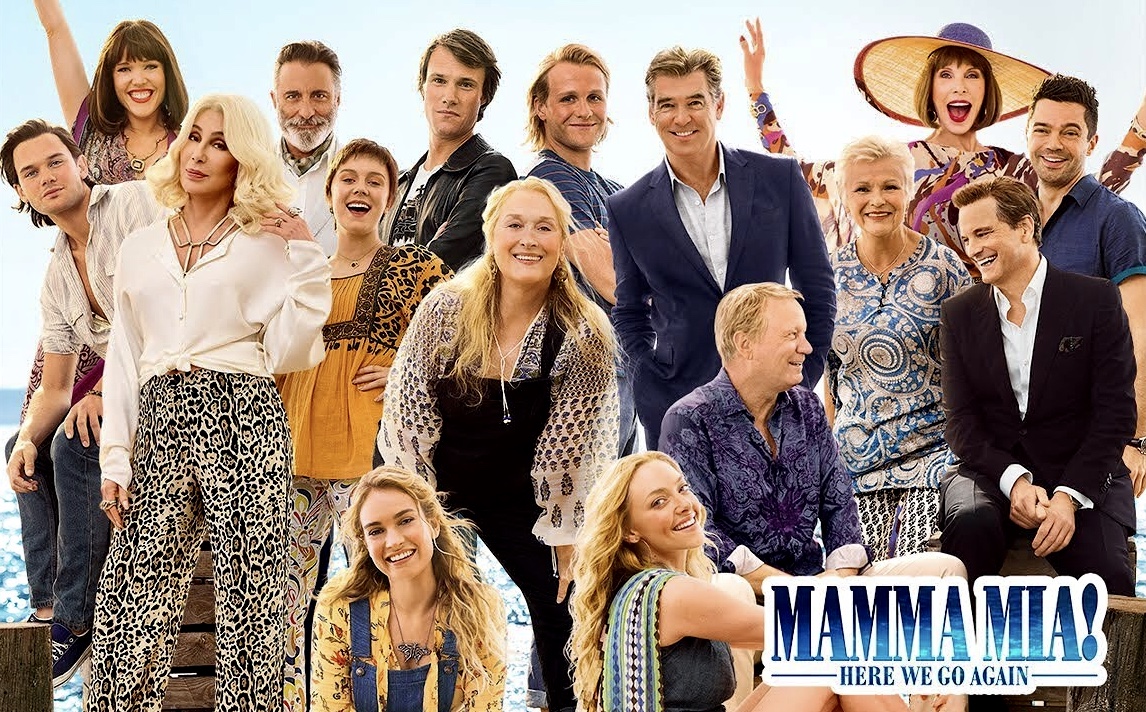
Here We Go Again!


Did you enjoy the musical play and/or 2008 film, Mamma Mia!? Then you will enjoy the 2018 sequel, Mamma Mia! Here We Go Again. I discovered it accidentally while scrolling ahead on the HBO schedule.

A prettier and more mature Sophie is now in charge of her mother Donna’s hotel, planning a grand re-opening after her mother’s passing a year earlier. That’s basically the story setting, but of course, it gets complicated. We know what happened in the original movie, and now we find out what preceded and followed it.

The original characters reprise their roles in present day, and younger actors in flashbacks. And (wild cheers) ... Cher’s in it.

Oh, and those ABBA songs you love and missed in the original movie? Quite a few are performed in this sequel. And that’s good, because let’s face it, ABBA’s music makes the Mamma Mia! play and movie(s) sparkle. I bet you, like me, will be singing along.

For the record, Here We Go Again was a big box office success, bringing in neatly $400 million against a $75 million budget.

Mamma Mia! Here We Go Again is great entertainment with excellent production values, well worth your time, unless you don’t like ABBA.

Three notes: (1) The christening scene is an emotional tear-jerker, (2) thankfully, Pierce Brosnan doesn’t sing any solos, and (3) there is an Easter egg at the end of the closing credits, so listen to the music until you get there, or alternatively fast forward.


Sunday, July 21, 2019

Cracker Jack Re-Experience


Cracker Jack was a favorite snack when I was younger. Who can forget the caramel-coated popcorn and peanuts in a box featuring a cartoon Sailor Jack and his dog Bingo on the front?

And the toy prize inside. When I was really young, like in elementary school, the toys consisted of metal cars, rings, and other trinkets. By the time I got to middle school, they had turned to plastic. When I checked into college, they were chiefly soak-and-apply “tattoos.”

Cracker Jack was, and still is, famous. Its name is sung at practically every Major League Baseball game during the seventh-inning stretch, in the iconic baseball anthem, “Take Me Out to the Ball Game” (“Buy me some peanuts and Cracker Jack, I don’t care if I never get back”).

Anyway, I recently had a hankering for some of these treats and sought them out at the local supermarket.

Instead of the one-ounce boxes I remember fondly, they were being sold in 8-1/2 ounce bags. So I bought one, because ... well, why not.

I have since come to a few conclusions from my first Cracker Jack experience in at least a dozen years:

(1) It’s too sweet. As I’ve aged, my taste buds have evolved. What the vast majority of people consider “normal sweet” now registers in my mouth as “too sweet.” “Too salty,” for me is “just right.”

(2) There aren’t enough peanuts. In that whole bag, I came across only 11 peanuts, not even a dozen, and yes, I counted them.

(3) The prize inside isn’t even worth mentioning on the box front. It was a peel-off sticker, that I stuck on the side of a tissue box, soon to be relegated to the wastebasket.

I don’t think I’ll be buying Cracker Jack any more. Personally, I like kettle corn these days—crisp, salty, and slightly sweet. Freshly made if possible, or in a small bag.

So root, root, root for the home team, and get me a hotdog and beer while you’re at it.